

In this first section, we explain what a financial forecast is, what it’s used for, and when it’s useful for a company to consult it.
The financial forecast is a financial document included in the business plan for a new business venture, a business acquisition, or a business expansion. It may include several tables and accounting and financial indicators, such as:
It is intended for the key stakeholders in your project:
It plays a role at various stages of a company’s life cycle. We’ll discuss this in more detail in the following paragraphs.
Financial projections are useful both internally (for you and your partners) and externally (for private and public investors, as well as banks).
For you, it allows you to:
From an investor's perspective, it is useful for convincing them of your company's potential, particularly in terms of profitability.
The financial forecast is part of the business plan: a document that outlines projections for a company’s growth over several years. Its purpose is:
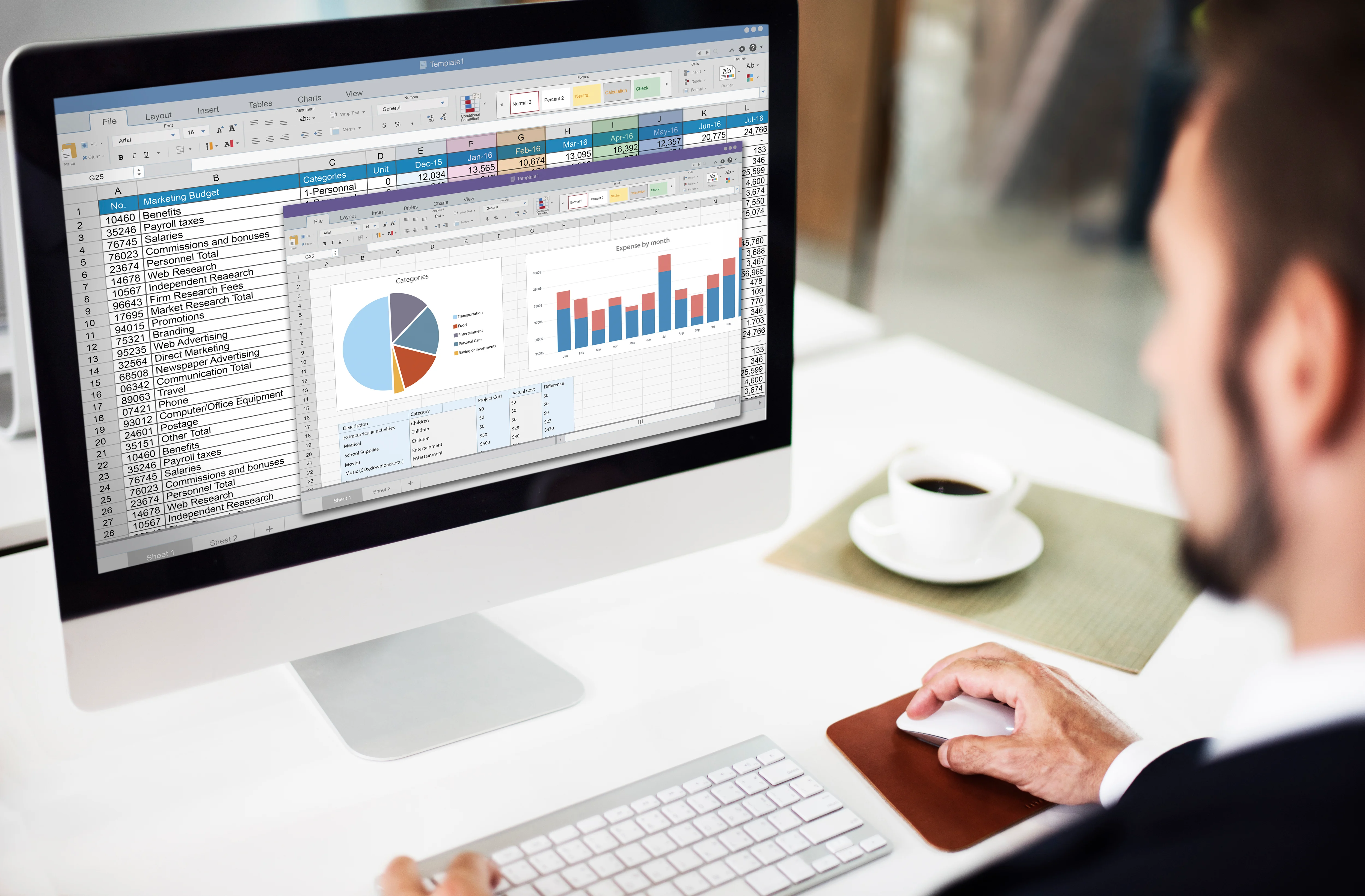
Financial forecasting plays a role at various stages of a company’s life cycle: whether it involves starting a new business, acquiring an existing one, or expanding operations.
When starting your business, you’ll need to validate your business model by demonstrating that your business will be profitable. The projected income statement and key performance indicators (KPIs) will highlight your projected results: revenue, gross margin, EBITDA (earnings before interest, taxes, depreciation, and amortization), net income, etc. The cash flow forecast and working capital requirements (WCR) will show the trend and amount of your cash flow needs over a three-year period. This allows you to forecast:
💡 Of course, these figures are estimates. The main challenge is to try to get as close as possible to reality, using rational and well-founded estimates (market research, industry statistics, initial operational results, etc.).
When acquiring a business , the information contained in the financial projections will serve as a basis for your decision-making. It is useful for valuing the target company, for outlining the project’s key operational directions, and for convincing investors and banks to support you in this venture.
During the growth phase, cash flow and financing needs may increase (if working capital requirements are positive). You will need to assess these needs in order to plan effectively. Once you have assessed this financing need, you will need to present your figures to investors (bank financing, fundraising, grant applications). A financial forecast is a document that is highly valued—and often required—when seeking financing to support your company’s growth.
As we have seen, the financial forecast consists of several tables and indicators: projected income statement, key performance indicators (KPIs), financing plan, cash flow statement, projected balance sheet, and financial aggregates.
We’ll come back to the projected income statement and balance sheet later. For now, let’s focus on the other parts of your forecast.
Key financial ratios are indicators that break down a company’s net income. They highlight key information about the company’s ability to generate profits. Key financial ratios are calculated by examining the components of the income statement (starting with revenue and ending with net income):
💡 Among these metrics,EBE (similar to EBITDA) reflects your company’s ability to generate profits. It represents the potential cash flow generated by operations. This metric is very important to banks and investors.
A projected cash flow statement is a table that outlines all the cash inflows and outflows you anticipate over the next fiscal years (or months). This table is designed to provide a month-by-month breakdown of projected cash flows.
In this case, all incoming and outgoing transactions are recorded as inclusive of all taxes, just like on a bank statement. They are broken down by month and by category (e.g., raw materials, rent, salaries, taxes, etc.) or by function (e.g., marketing, operations, production, IT, overhead, etc.).
💡 This document is very important for helping you anticipate changes in your working capital requirements and finance your business in the best possible way.

A cash flow statement is a document that outlines your company’s financial needs at the beginning of a period (initial cash flow statement) and then its financial resources over the following fiscal years (typically three years).
The goal is to match your projected financing needs with the best available financial resources.
In general, the main potential financing needs are:
And the main financial resources are:
We will return to working capital, free cash flow, and net cash in the second part of this article. Here, the metric we are focusing on is CAF: cash flow from operations.
Cash Flow from Operations (CAF) is a ratio that measures the cash generated by the operating cycle (the “core business”) to finance the company’s funding needs. This ratio highlights:
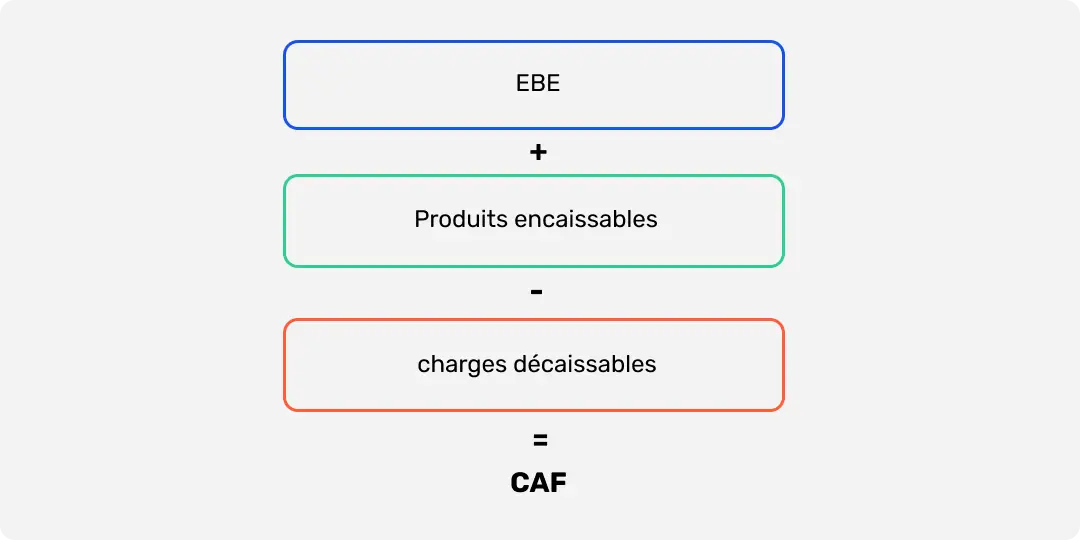
The projected cash flow can be calculated based on EBITDA by adding non-operating income and expenses that affect cash flow.
CAF = EBIT + cash receipts – cash disbursements
The financial forecast is developed in several steps. Before you begin, you’ll need a solid technical foundation and reliable business data. Next, you’ll need to identify and categorize historical expenses and revenues. Finally, you’ll need to develop your financial projections.
Preparing a comprehensive financial forecast may require knowledge of accounting and taxation, as it is based on two financial statements: the projected income statement and the projected balance sheet.
The projected income statement lists the revenues and expenses you anticipate for your business. These revenues and expenses can be of various types (operating, financing, or investment-related).
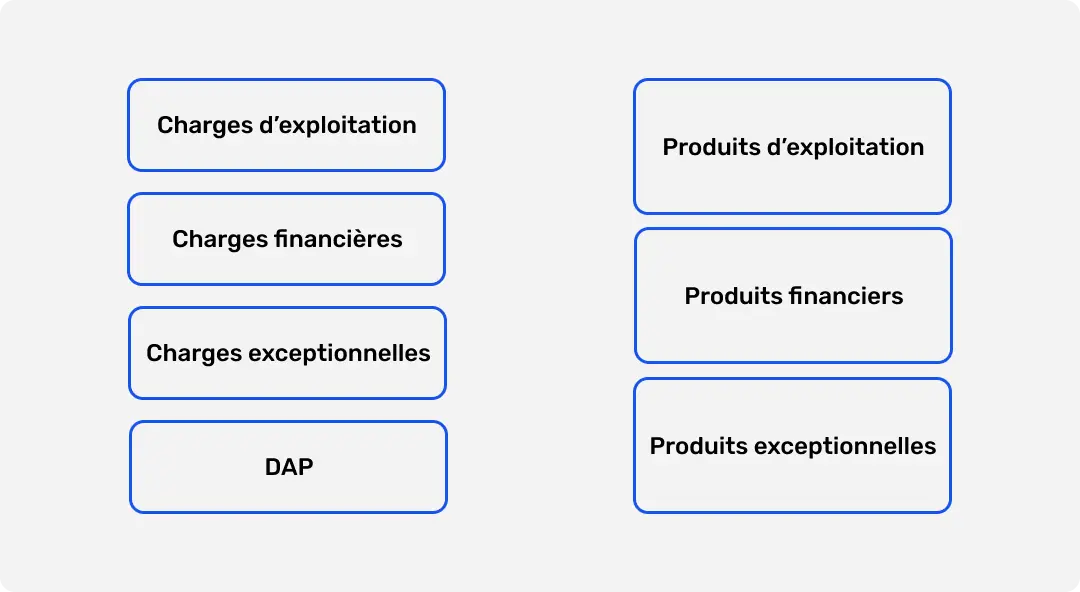
They do not necessarily affect your cash flow and are not recorded based on cash flows, but rather according to accounting principles of accrual and the occurrence of the transaction. For example:
The projected balance sheet , on the other hand, outlines your company’s financial position over the coming years, as well as the resources needed to fund it. On one side, it lists your company’s assets (fixed assets, inventory, cash, and accounts receivable); on the other, it lists its liabilities ( equity and debt).
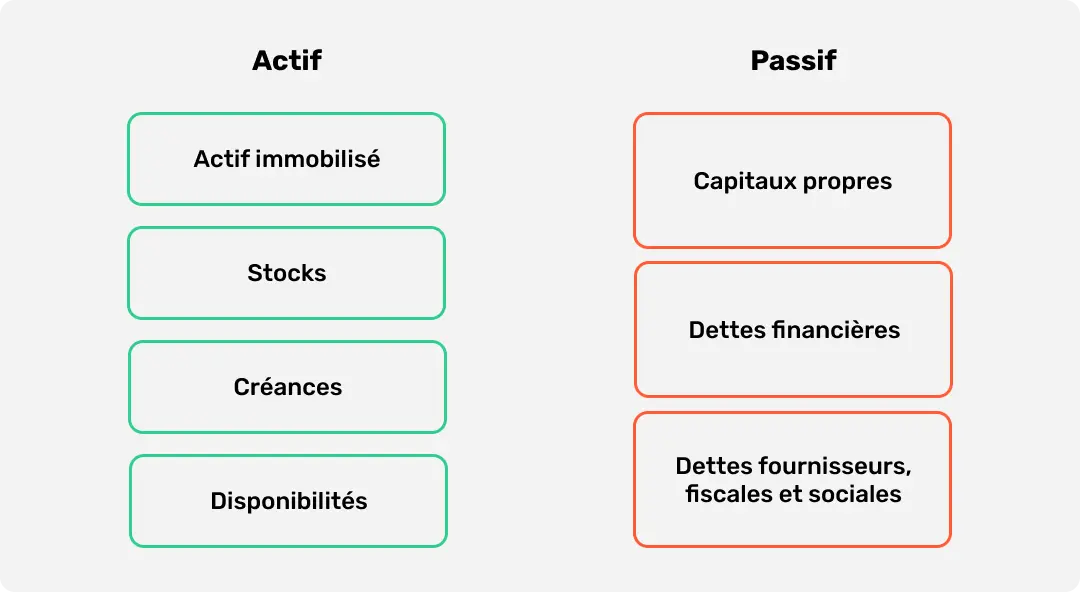
The projected financial statement highlights key figures that are essential for understanding your project’s financing capacity and needs:
Knowledge of taxation is also required to calculate the impact of taxes and tax savings on your financial results and cash flow. VAT, corporate income tax (CIT), the CET, and tax credits all affect your financial forecasts.
In addition to accounting and tax knowledge, a financial forecast must be based on reliable data. Otherwise, the figures presented will be far from reality. To ensure this, you need to rely on market research and have a clear vision of future business operations.
Identify and categorize historical costs and receipts
This section is useful if your business is already established and you want to create a financial forecast. We recommend using your past financial data to help you build more accurate forecasts.
For each expense and revenue item, we encourage you to create analytical categories and subcategories. Cost accounting involves identifying where your expenses and revenues are allocated. You can allocate your accounting entries by customer, product, department, contract, or geographic region.
Once you’ve completed this work, you can create more accurate forecasts based on your understanding of your company’s future operations. You’ll also be able to identify the profitability of specific products, customers, or geographic regions based on your cost allocation.
Make the right assumptions for each line of cash inflows and outflows
For each line of projected cash inflows and outflows, we recommend basing your figures on your business assumptions (rather than rough estimates or percentages of revenue, for example).
In a way, it’s aboutwriting the story of your business before filling in the blanks of your financial forecast.
“For my Product A, I expect to generate €35,000 in revenue per month during the first year. My revenue growth rate is 30% per year. As for my expenses:
This way, all your figures can be verified and justified, since they are based on specific assumptions (“the payroll in year N+2 is €200,000 because we will have X employees, with a gross annual salary of €X,000 for Employee A, €X,000 for Employee B, and so on”).
Building formulas and creating forecast tables
Time to model! Now is the time to fill in the cells of your forecast. The figures in each of your tables are linked. That’s why you need to build formulas to automate your tables as much as possible and avoid manual data entry errors. Of course, there are tools available that can save you this modeling work. We’ll come back to that at the end of this article.
There are two main tools you can use to create your financial forecast: a spreadsheet (Excel, Jet Sheets) or cash flow management software.
A spreadsheet program —such as Excel or Google Sheets—is software used to create and manipulate tables. They are widely used in businesses. Their main advantage is flexibility. Spreadsheet programs offer a wide range of formulas, functions, and formatting options. This allows users to create all kinds of tables tailored to their businesses and needs.
You can create your budget in a single file called a “workbook.” Within your workbook, you use a sheet (or “tab”) for each section of your budget:
💡 If you want to collaborate with others on creating these spreadsheets, consider using the cloud-based version of these programs.
While flexibility is a major advantage, spreadsheets have many limitations:
You can use cash flow management software to create your forecast. It helps overcome the limitations of spreadsheets (see above) and gives you the best chance of creating a reliable, customizable, and visually appealing forecast.
To get started, you need to download the software—or use an online tool—and enter the key information directly. The (many) benefits of using cash flow management software like Fygr for your forecasting are:
At Fygr, we’ve created the first solution capable of automatically generating financial projections, using a smart tool designed to save you time, effort, and money. If you want to give yourself the best possible chance of success by presenting reliable, relevant, and visually appealing financial projections, then Fygr is the perfect tool for you.
Discover how Fygr can transform your cash management with a free trial. During this limited 7-day period, take advantage of a new way to manage your company's finances:
Take back control of your finances and boost your growth today!