

A cash flow statement is a financial document that forecasts a company’s cash inflows and outflows over a given period, typically one year. It is essential for anticipating cash flow needs and avoiding overdrafts. It provides a clear picture of the company’s operating cycle, tracks changes in its cash position, identifies periods of financial strain, and helps optimize cash management. A well-developed cash flow plan contributes to the company’s financial stability.
A cash flow forecast is a strategic tool that guides a company in its financial decisions. Its primary value lies in its ability to provide a clear, forward-looking view of cash flows, enabling proactive management.
A cash flow plan helps identify periods when expenses exceed cash inflows. This foresight is crucial for avoiding bank overdrafts or late payments. Cash flow forecasts enable you to plan the necessary actions, such as taking out a loan or negotiating with suppliers.
💡 Tip: Update your plan on a set date each month to account for unexpected changes.
By tracking cash flow on a month-by-month basis, the company can identify financial imbalances. This allows it to adjust inventory management, review payment terms, account for hiring forecasts, or maximize customer collections. A positive cash flow plan enhances stability and credibility with financial partners.
With a clear picture of the financial situation, executives can adjust their investment plans. For example, a period of excess cash flow can be used to pay off a loan or finance a new project.
Example: Use excess cash to reduce interest expenses on a loan.
The cash flow forecast provides a detailed overview of cash inflows and outflows. This facilitates real-time cash flow monitoring, which is essential for quickly adjusting strategies as needed. By comparing it to actual performance, it serves as a reliable indicator for analyzing variances and refining forecasts.
Examples of items to follow:
A well-structured cash flow plan is also an effective communication tool. It demonstrates the company’s financial strength to third parties, such as banks or investors. It fits naturally into a financial forecast, reassuring partners about the company’s viability and financial management.
The cash flow statement summarizes and compares all of the company’s cash inflows and outflows on a monthly basis. It highlights the monthly cash balance and calculates the cumulative cash balance for the company. It therefore breaks down cash inflows and outflows for each month.
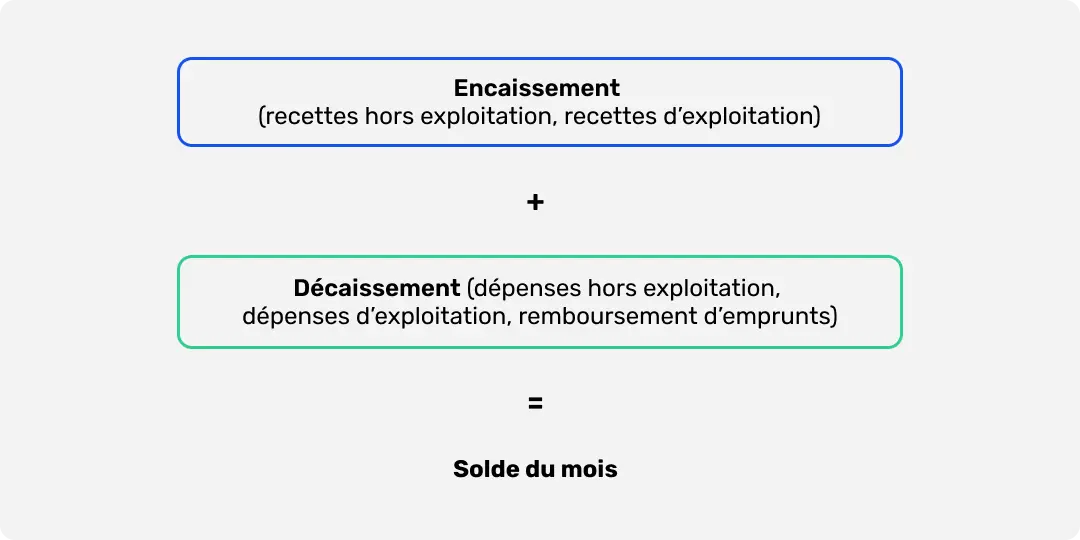
📌 Feel free to use the resources available on the BPI France website, which supports French startups and entrepreneurs!
The cash flow statement allows the company to immediately see its cash balance for the month and the cumulative balance from one month to the next. It therefore helps ensure that available cash is sufficient to cover upcoming expenses.
Above all, the cash flow statement helps youanticipate a negative balance and find a way to cover that shortfall before the business launches. Indeed, if the cash flow statement shows a negative balance, it is essential to adjust your strategy. This prevents you from launching your business while running the risk of an imminent cash flow crisis.
A cash flow plan therefore provides a clear overview of a company’s operations and helps mitigate risks. As such, this document serves as a crucial foundation for defining the company’s strategy and managing risks. It also facilitates communication among the company’s various stakeholders and helps plan for future growth.
Poor cash flow management can quickly lead to major difficulties for a company, jeopardizing its financial stability and its ability to operate normally. Here are the main risks associated with ineffective cash flow management.
A negative cash flow occurs when cash outflows exceed cash inflows, leaving the company without available cash. This situation can lead to:
Poor cash flow management directly affects the company's financial health:
💡 Practical tip: Update your cash flow forecast regularly to closely monitor changes in cash flow and anticipate periods of financial strain.
Proactive cash management is essential to avoid these risks:
💬 Key takeaway: Effective cash management is not limited to balancing cash flows. It also allows you to seize growth opportunities and ensure long-term stability.
Careful monitoring of the cash flow plan ensures optimal management of cash flows and helps anticipate potential difficulties. Here are the key steps to follow:
Update the cash inflows and outflows in your cash flow statement at the end of each week or month. This allows you to compare actual amounts with the projections in the cash flow budget.
💡 Tip: Adjust the format of your table to make it easier to add new income or expenses.
Identify discrepancies between your forecasts and actual results to anticipate the impact on your cash flow. A shortfall in a column may indicate a delayed payment from a customer or an expense that exceeds the expected payment. Analyze these differences to adjust your strategies.
💬 Example: If actual revenue is lower than expected, check payment terms and adjust your non-essential expenses.
Choose forecasting software like Fygr or a cash flow plan template to simplify tracking. These tools automate cash flow calculations and let you view real-time updates on your finances and sales.
Fygr is a cash flow management software that makes it easy to create a cash flow plan. We already support thousands of customers with their day-to-day cash flow management.
Accurate monitoring allows for a quick response in the event of a cash flow shortfall. For example:
💡 Reminder: Adjustments should take into account your projected balance sheet and your short-term cash flow needs. In short, following a cash flow plan involves regularly updating data, analyzing variances, and using appropriate tools. This process ensures sound financial management and secures the company’s future.
When interpreting a cash flow statement, it is important to pay attention to both revenue and expense items for a given month. It is also important to interpret the statement in a dynamic manner.
Here are some best practices to help you make the most of your cash flow plan and avoid mistakes.
A cash flow forecast must be realistic in order to produce achievable projections. This is crucial not only for the company’s credibility with potential investors but also for effectively planning its cash flow.
Our free Excel template lets you create a projected cash flow plan by category using your bank transactions. It’s easy!
Updating a cash flow forecast regularly and accurately is quite time-consuming.
If you'd like to use an automated expert tool to help you set all of this up more easily, sign up for a free trial on Fygr.
With Fygr, all you have to do is:
Discover how Fygr can transform your cash management with a free trial. During this limited 7-day period, take advantage of a new way to manage your company's finances:
Take back control of your finances and boost your growth today!