How can cash flow management be optimized for artisans?

Craftsmen face specific cash flow management challenges. Discover best practices for addressing cash flow issues and how a tool like Fygr can meet all your needs.

Artisan: the essentials of cash flow management

Cash flow management is a critical issue for artisans, directly linked to the survival and development of their business. Tensions arise from structural imbalances between activity, cash inflows, and expenses:
Income varies greatly depending on orders and seasonality
Delay between completion and payment with extended payment terms
Fixed costs that cannot be reduced, regardless of the level of activity
Limited management time between technician, sales, and manager roles
Fygr enables artisans to regain control of their cash flow without complexity, thanks to centralized cash flow management, automatic projections, and clear visibility into their financial future.


The specific cash flow challenges for artisans

Why is cash flow management particularly difficult for tradespeople? We have identified three major issues.

Income variability

The craft sector is characterized by extreme income volatility, directly linked to the nature of the activities themselves.

Unlike standardized service companies, a craftsman's financial resources fluctuate constantly depending on orders, the season, and the local economic situation. These variations can be dramatic: one month may generate several thousand euros in revenue, while the next may be almost deserted, with no significant income.

This irregularity makes forecasting particularly complex and exposes craft businesses to constant risks of cash flow problems.

Critical gap between realization and collection

Craftsmen face a structural gap between the completion of work and actual invoicing.

A project can require several weeks of intense work, with significant direct costs (materials, travel, labor), without any guarantee of immediate payment. Payment terms, which are often long and variable, create constant financial pressure, forcing craftsmen to advance significant funds before they can recover them.

This mechanism particularly weakens small businesses that do not have substantial financial reserves to absorb these time lags.

Accumulation of financial obligations

The artisanal economic model imposes a complex set of financial obligations that weigh heavily on cash flow.

Artisans must simultaneously manage unavoidable social security contributions, regular investments in equipment, and tax payments, while maintaining their self-financing capacity. These multiple financial constraints arise regardless of actual income levels, creating constant pressure.

The multiple skills required (being a technician, salesperson, and manager all at once) make this management even more complex, as craftsmen must devote precious time to these administrative aspects at the expense of their productive activity.
BEST PRACTICES

Best practices for optimal cash flow management for craftsmen

Anticipating and planning for seasonal financial cycles

In the world of craftsmanship, financial management relies on a deep understanding of seasonal variations in activity. Every trade experiences slow periods and times of high demand, which have a direct impact on cash flow. A successful artisan must therefore develop a forward-looking vision of their business, accurately identifying potential moments of financial stress. This proactive approach involves building up financial reserves during good times, diversifying sources of income, and planning investments and expenses based on projected cash flow. The key lies in meticulous planning that transforms seasonal uncertainty into strategic opportunity.

Rigorous control of the billing-payment cycle

The financial health of a small business depends heavily on its ability to effectively manage the billing and collection process. It is crucial to implement strict procedures for issuing quotes, validating them, billing immediately, and following up on payments. This involves clear communication with customers about payment terms, structured and systematic reminders in the event of late payment, and regular analysis of payment times. The aim is to minimize the time between the provision of the service and receipt of payment, limiting the risk of unpaid bills and streamlining the financial cycle.

Separation and optimization of personal and professional management

Craftsmen, who often straddle the line between personal and professional life, must clarify their financial flows. Creating a bank account dedicated exclusively to professional activities improves clarity and efficiency. This separation makes it possible to accurately track performance indicators, simplify accounting, and facilitate tax returns. It then becomes possible to clearly distinguish professional expenses, categorize costs, and have a transparent view of the business's actual profitability. This approach helps to professionalize management and transform the artisan into a true strategic business leader.
CHOOSE FYGR

Why use Fygr as a tradesperson?

There is only one solution for implementing all these best practices: Fygr. It is cash management software that is perfectly suited to all types of tradespeople. Find out below how software like Fygr could help you boost your business's cash management.
GOOD REASON #1

Financial management for artisans

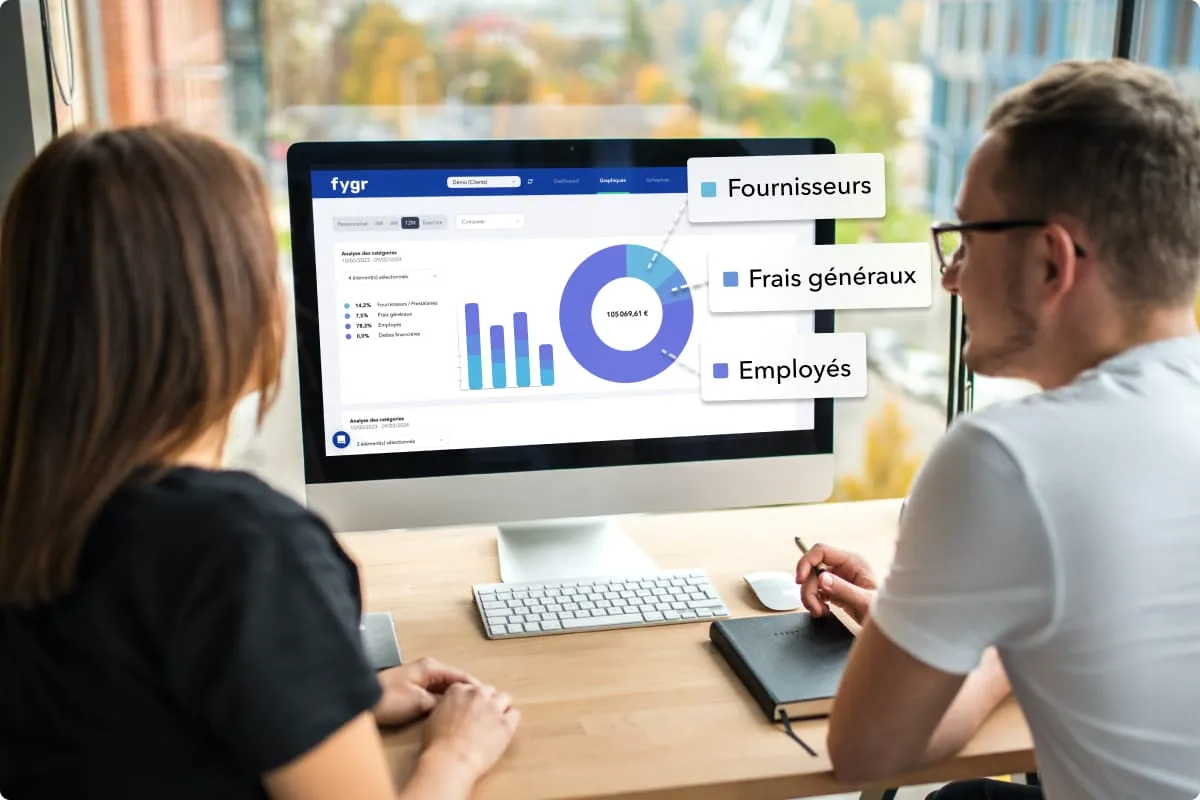
Centralize your financial flows and control the traceability of your projects
Accurate tracking of payments received by craft project (construction, renovation, creation)
Automatic categorization according to service type and customer
Clear separation between business and personal expenses
GOOD REASON #2

Full financial visibility

Plan ahead with confidence for the financial cycles of your craft business
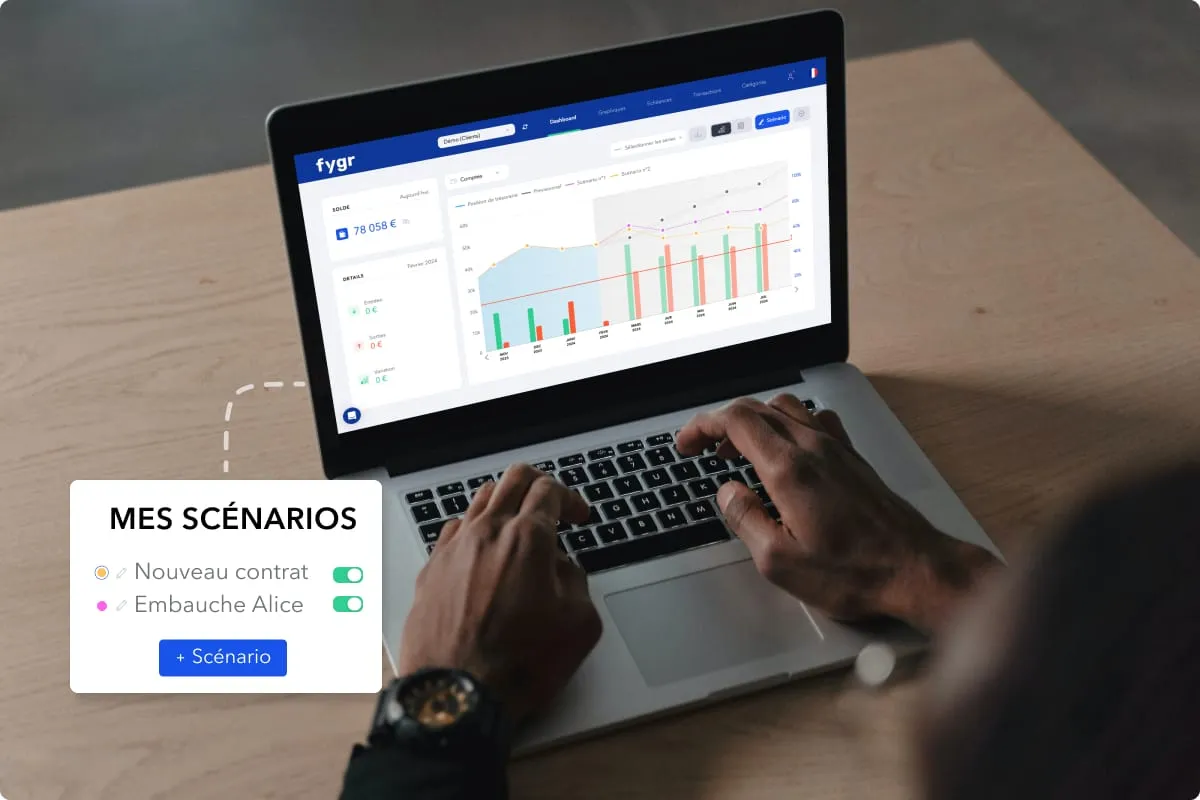
Revenue modeling based on your different types of services
Projected investments in professional equipment
Decision support for strategic investments
GOOD REASON #3

Comparative analysis forecast/actual

Turn your data into performance drivers
Dynamic comparison between forecast and actual
Adapt quickly and make the decisions that matter
Real-time adjustment of your pricing and sales strategy

They chose Fygr

Here's what some of our customers have to say after choosing Fygr to visualize their financial data:
Great tool and great team always available to answer any questions. If you're looking for a tool to help you forecast your cash flow, go for it!😇
Ozlem YILMAZ
Administrative Manager @ Ezel Construction
FYGR is an excellent tool that allows you to accurately track your figures (cash flow/income/expenses/advance payments) every day. Thanks to the categorization of expenses, it is very easy to forecast expenses, including automatically and over several years. The support team is very responsive and attentive, thank you to them. The solution is stable, easy to use, and flawless. It is ideal for building your budget. Each exceptional expense is tested to verify its feasibility and set commercial objectives if necessary. As a result, I sleep soundly (or party instead of doing accounting!)
Bravo, and thank you!
Simon Giron
Founder and CEO @ Naobike
Fygr can help you better control your expenses and manage them over time, as it gives you a comprehensive, long-term view of your cash flow. It doesn't happen on its own, but I must admit that Fygr is very comprehensive and saves a considerable amount of time.
Dany Fernandez
Manager @ Atelier du pic
FAQ

Everything you need to know about cash flow management as a tradesperson

Answers to the questions you ask us most often.
How to choose cash management software as a tradesperson?
To choose the right software, start by identifying your specific needs: site management, quote tracking, investment forecasting. Choose a tool with a simple interface and features tailored to the trades. Check compatibility with your existing tools and make sure that the support includes the specific features of your sector. Fygr can be a relevant solution for tradespeople who want to professionalize their financial management.
What are the advantages of cash management software over Excel for a craftsman?
Cash management software offers complete process automation, significantly reducing data entry errors and the time spent on administrative tasks. Unlike Excel, it allows for accurate tracking of margins per project, automatic bank synchronization, and dashboards tailored to the specific needs of tradespeople. Backups are secure and bank data is updated in real time.
How can a craftsman make reliable cash flow forecasts?
To make accurate forecasts, collect your historical data for at least 12 months, taking into account the seasonality specific to your business. Analyze your billing cycles, include your fixed costs (social security contributions, investments), and your expected income. Develop scenarios that take into account the specific characteristics of your business: slow periods, variations in orders, investments in equipment. Regularly update your forecasts based on actual results.
How long does it take to set up cash management software for a craftsman?
Setup time varies depending on the complexity of your business, generally ranging from a few hours to a few weeks. The time required depends on the number of accounts to be synchronized, the diversity of your projects, and your management practices. Fygr offers rapid integration tailored to the constraints of tradespeople, with personalized support to facilitate the learning curve.
How much does cash management software cost for a craftsman?
At Fygr, prices start at €59 per entity and per connected bank account. The solution is designed to be accessible to small business owners, offering particularly good value for money. The cost should be considered an investment in the professionalization of your financial management.
Who are Fygr's competitors, and who should you choose for a craftsman?
Fygr's main competitor is Agicap. However, Fygr stands out for its ease of use and adaptability to the specific needs of artisans. Artisans particularly appreciate the intuitive interface and features designed for small businesses, unlike more complex and expensive solutions.
How do I know if my small business needs cash flow management software?
Your company needs this kind of tool if you are experiencing difficulties forecasting your cash flow, spending a lot of time on Excel spreadsheets, lacking visibility on your margins per project, having problems managing deposits and retention guarantees, or experiencing growth in your business. This is particularly relevant if your annual revenue exceeds €100K.
What are the essential features for a craftsman?
Key features include bank synchronization, cash flow forecasting tailored to craft cycles, quote and invoice tracking, project-specific dashboards, alerts for critical periods, deposit management, and dynamic estimation of social security contributions. Integration with specialized invoicing software is also important.
Does cash management software handle invoice tracking?
Yes, Fygr takes into account the specificities of the trades: quote management, retention tracking, equipment investment projections, and automated calculation of social security contributions. The software offers integrations with tools specific to tradespeople.
How can you train your employees to use the software?
Fygr offers comprehensive support during the trial period. The aim is to simplify the learning curve for tradespeople who are unfamiliar with digital tools, with tailored support and short, practical training sessions.
How can a craftsman measure ROI?
ROI is measured by comparing the cost of the software to the benefits: time saved on administrative tasks (5-10 hours per month), reduction in overdrafts, improved site profitability, and better anticipation of critical periods. A positive ROI is generally achieved within a few weeks.
What is the difference between this and accounting software for tradespeople?
Accounting software records past transactions, while cash management software provides a forward-looking and operational overview. For a craftsman, this means being able to anticipate financial needs, optimize margins, and transform administrative management into a real strategic tool.