Optimizing cash flow management for a retail company

Retail is a fascinating sector where cash management challenges are numerous. In this article, we will look at what these challenges are and how best to manage them. At the end of this article, we will introduce you to Fygr, the ideal cash management solution for retail.

Retail: key points to remember about cash management

Cash management is a major strategic challenge for large retailers, whose business model is based on high volumes, low unit margins, and multi-channel operational complexity. Tensions arise from a structural imbalance between inventory immobilization, sales seasonality, and multiple financial flows:
High inventory turnover and high working capital requirements tying up cash
Marked seasonality of sales (holidays, promotions, events) generating significant variations
Multiplication of distribution channels (physical, e-commerce, drive-through) with heterogeneous flows
Constant pressure on margins requiring optimization of every dollar invested
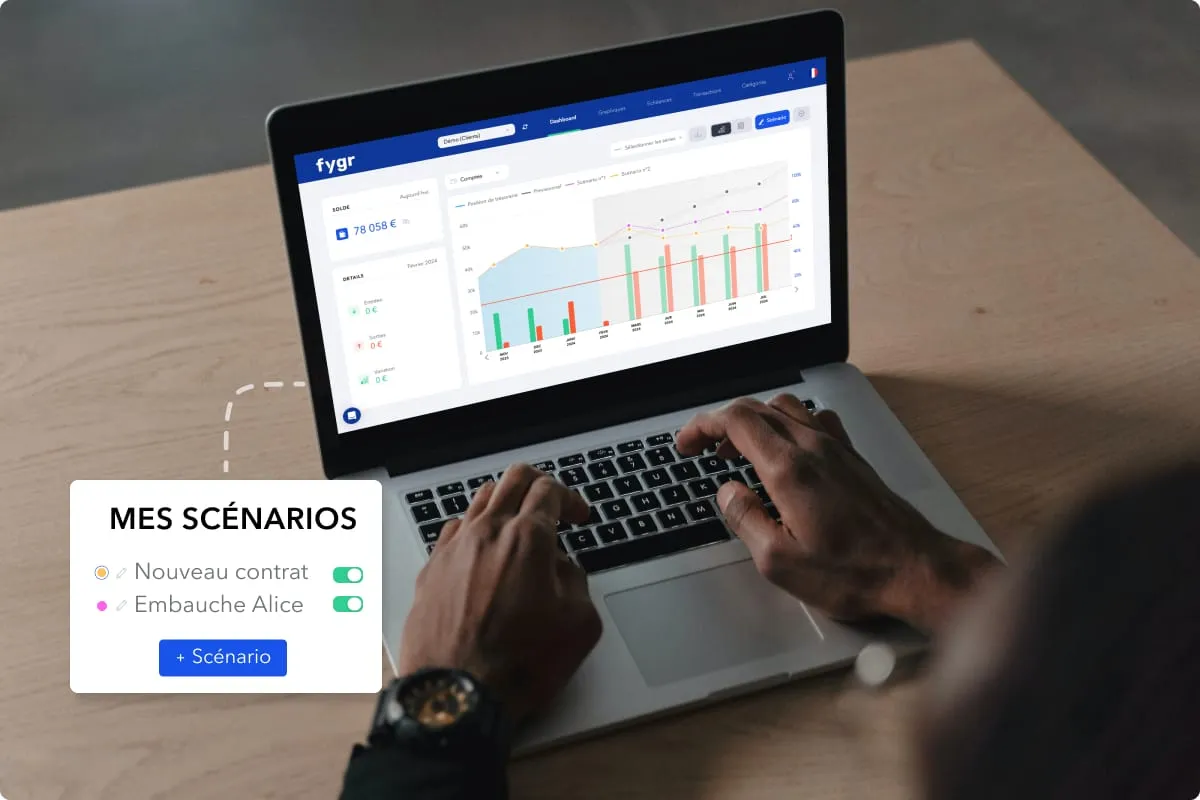
Fygr enables large retailers to manage their cash flow in real time, secure their working capital requirements, and gain financial visibility across their entire network.


The specific cash flow challenges for large retailers

Why is cash management particularly difficult for companies in the retail sector? We have identified three major issues.

Extensive Inventory Turnover and Working Capital Requirements

Large retailers are characterized by considerable inventory volumes, with turnover rates of up to 12 to 15 times per year.

These massive volumes tie up significant capital, creating constant pressure on cash flow.

Retailers must anticipate supplies, negotiate payment terms with suppliers, and simultaneously manage a variety of inventories ranging from fresh produce to durable goods, each with its own logistical and financial constraints.

Extreme Seasonality and Volatility of Financial Flows

The sector experiences particularly marked seasonal variations, with peaks in activity during holiday periods, sales, and promotional events.

These fluctuations generate significant differences between cash inflows and outflows, forcing companies to maintain substantial financial reserves.

The ability to smooth out these variations becomes a strategic issue, requiring careful management of supplies, human resources, and investments.

Multiple Distribution Channels and Financial Complexity

Large retailers now operate across multiple channels—physical stores, e-commerce platforms, specialized points of sale—each with its own financial flows.

This multiplicity considerably complicates accounting consolidation and cash management.

Each channel generates specific costs, different payment methods, and distinct billing cycles, making financial management particularly challenging.
BEST PRACTICES

How to effectively manage cash flow for a company in the retail sector

Synchronize financial flows between points of sale

Large-scale retail is characterized by a multitude of points of sale with complex financial dynamics. A centralized and synchronized approach to cash flow management is crucial to maintaining accurate visibility across all economic performance indicators. This practice involves developing a system for rapid and consolidated reporting of financial data from each store, enabling real-time analysis of cash receipts, inventory, and margins. Synchronization also makes it possible to immediately detect performance disparities between different points of sale, thus offering a much more refined and responsive strategic management capability.

Anticipate seasonal cash flow variations

The retail sector experiences significant fluctuations linked to holiday periods, sales, and major commercial events. An essential practice is to build accurate forecasting models that incorporate these cyclical variations. These forecasts must take into account not only historical sales data but also emerging consumer trends, planned marketing campaigns, and future investments. The goal is to have a dynamic projection that allows for continuous adjustment of procurement, inventory, and financing strategies to maintain stable cash flow despite these seasonal fluctuations.

Optimizing negotiations with suppliers

In mass retail, supplier relationship management is a strategic financial lever. A best practice is to develop a proactive approach to negotiating payment terms, aiming to obtain favorable payment terms while maintaining high-quality partnerships. This involves segmenting suppliers, understanding their financial constraints, and building win-win agreements that reduce working capital requirements. The ability to negotiate appropriate payment terms, stagger payments, and obtain preferential conditions is becoming a real driver of financial performance.
CHOOSE FYGR

Why use Fygr for a company in the retail sector?

The ideal solution for cash flow management in the retail sector? Fygr. We already serve many companies in the retail sector, and all of them are very satisfied with the solution. Let's take a closer look at how we can help you in the rest of this article.
GOOD REASON #1

Multichannel Financial Management

Master the financial complexity of your distribution network
Real-time aggregation of cross-channel transactions (physical and digital)
Accurate identification of margins by point of sale and product type
Automatic detection of potential financial anomalies
GOOD REASON #2

Dynamic Cash Flow Forecasts

Anticipate seasonal cash flows and optimize your business strategy
Cash flow projections based on consumption trends
Assessment of the financial impacts of commercial strategies
Dynamic adjustment of budget forecasts based on actual performance
GOOD REASON #3

Comparative Performance Analysis

Compare, optimize, and manage the financial performance of your network
Detailed benchmarking of performance between different points of sale and formats
Close monitoring of discrepancies between forecasts and actual results by product category
Identification of levers for optimizing margins and operating costs

They chose Fygr

Here's what some of our customers have to say after choosing Fygr to visualize their financial data:
Excellent software, very useful for obtaining data in real time and effortlessly. Easy to set up.
Sylvain Forte
CEO @ SESAMm
No entrepreneur likes to keep track of their cash flow.
And yet, it's the number one cause of start-up failure.
I tried everything on my own, without success.
Until I discovered Fygr.
Finally, a simple and intuitive tool.
That I enjoy using.
Laura CHETAIL 🥂
CEO @ KOKO Kombucha
I've been using Fygr every day since we installed it: I feel much more relaxed about my cash flow, without having to put in all the effort I used to with Excel.
Thomas Reynaud
Founder & CEO & Guarantor
FAQ

Everything you need to know about cash management for companies in the retail sector

Answers to the questions you ask us most often.
How to choose cash management software for a large retail company?
To choose the right cash management software, identify your specific needs: high transaction volume, multiple sites, complexity of financial flows. Choose a solution that can handle seasonality, inventory fluctuations, and the unique characteristics of large-scale distribution. Check the software's ability to consolidate data from multiple points of sale and provide real-time visibility into all financial flows.
What are the advantages of cash management software over Excel for a large retail company?
Cash management software offers complete automation of complex retail processes. Unlike Excel, it enables multi-account bank synchronization, accurate inventory management, and detailed performance tracking by point of sale. Automated dashboards incorporate industry-specific features such as seasonal variations, promotions, and international flows.
How to make reliable cash flow forecasts for a retail group?
For accurate forecasts, collect historical data over several years, taking into account the extreme seasonality of the sector. Analyze sales cycles by store type, integrate inventory data, promotional campaigns, and variations in supplier payment terms. Use multiple scenarios that take into account the specificities of each distribution format and consumer trends.
How long does it take to implement cash management software for a large retail group?
Implementation can take anywhere from a few weeks to several months, depending on the complexity of your organization. The main challenges include integrating systems from different points of sale, synchronizing multi-site financial flows, and consolidating inventory data. Software designed for large retailers must be able to interface with your existing sales and inventory management systems.
How much does cash management software cost for a retail group?
Costs vary significantly depending on the size and complexity of your distribution network. Solutions for large retailers are generally priced on a custom basis, depending on the number of points of sale, transaction volume, and specific features required. Expect an investment ranging from a few thousand to tens of thousands of euros per year.
Who are the competitors in the cash management software market for large retailers?
There are few players in the market specializing in cash management. Each solution has its strengths: some are particularly effective for multi-site management, while others excel at predictive analysis of inventory and sales. The choice depends on your specific needs in terms of financial consolidation and management.
How can I tell if my retail group needs cash management software?
You need a specialized solution if you are having difficulty consolidating cash flows from your various points of sale, anticipating inventory financing needs, or obtaining an accurate view of your performance by store. This is particularly crucial if your group manages multiple distribution formats or operates in multiple territories.