Cash management for businesses: 3 best practices 2026

Retail businesses experience cash flow fluctuations of 40 to 60% depending on the season. At Fygr, we help more than 3,000 SMEs optimize their financial management. By analyzing the cash flow of our retail customers, here are three best practices you can apply to reduce pressure on your business.

Retailers: Key points to remember about cash flow management

Retail businesses experience cash flow variations of 40 to 60% depending on the season. After analyzing the cash flows of Fygr users, here are the key points:
Three major challenges: extreme seasonality (60% variation), rapid inventory turnover, and complex multi-channel distribution.
Three effective best practices: managing seasonality, centralizing multi-channel flows, and optimizing supplies.
Concrete solution: use cash management software such as Fygr with automatic multi-account synchronization and reliable cash flow forecasting for up to 1 year.

The specific cash flow challenges for businesses

Why is cash management particularly difficult for retailers? We have identified three major issues.

Extreme seasonal volatility

The retail sector experiences particularly sharp fluctuations in revenue, with periods of hyperactivity such as sales or the holiday season alternating with periods of near-total stagnation.

These fluctuations create constant pressure on cash flow, forcing retailers to finance large inventories before peak periods, with no guarantee that they will be sold out completely.

The ability to weather these cycles becomes a matter of survival, requiring surgical precision in financial management.

Rapid depreciation of inventories

Retailers operate in an environment where the value of goods deteriorates rapidly, requiring extremely dynamic inventory turnover.

Every unproductive day represents a potential cost, between capital immobilization, depreciation risk, and fixed expenses.

The constant transformation of consumer trends amplifies this pressure, forcing companies to constantly anticipate future demand while minimizing the financial risks associated with unsold goods.

Multiple sales channels

The explosion of points of sale—physical stores, online marketplaces, e-commerce sites, social networks—has made it considerably more complex to track financial flows.

Each channel generates its own payment terms, commissions, and accounting specificities, making it difficult to understand the overall economic reality.

This fragmentation of revenue prevents a consolidated, real-time view of the financial situation, drastically limiting retailers' ability to make strategic decisions.
BEST PRACTICES

Best practices for optimal cash flow management for retailers

Managing seasonality with dynamic forecasting tools

Cash flow management in the retail sector is intrinsically linked to seasonal variations. As a retailer, it is essential to take this seasonality into account in your forecasts. It is important to accurately model peaks and troughs in activity: sales periods, busy times such as the holiday season, and promotional events can then be better anticipated, which drastically reduces financial risks and allows for strategic adjustments in real time.

Centralize and synchronize multi-channel financial flows

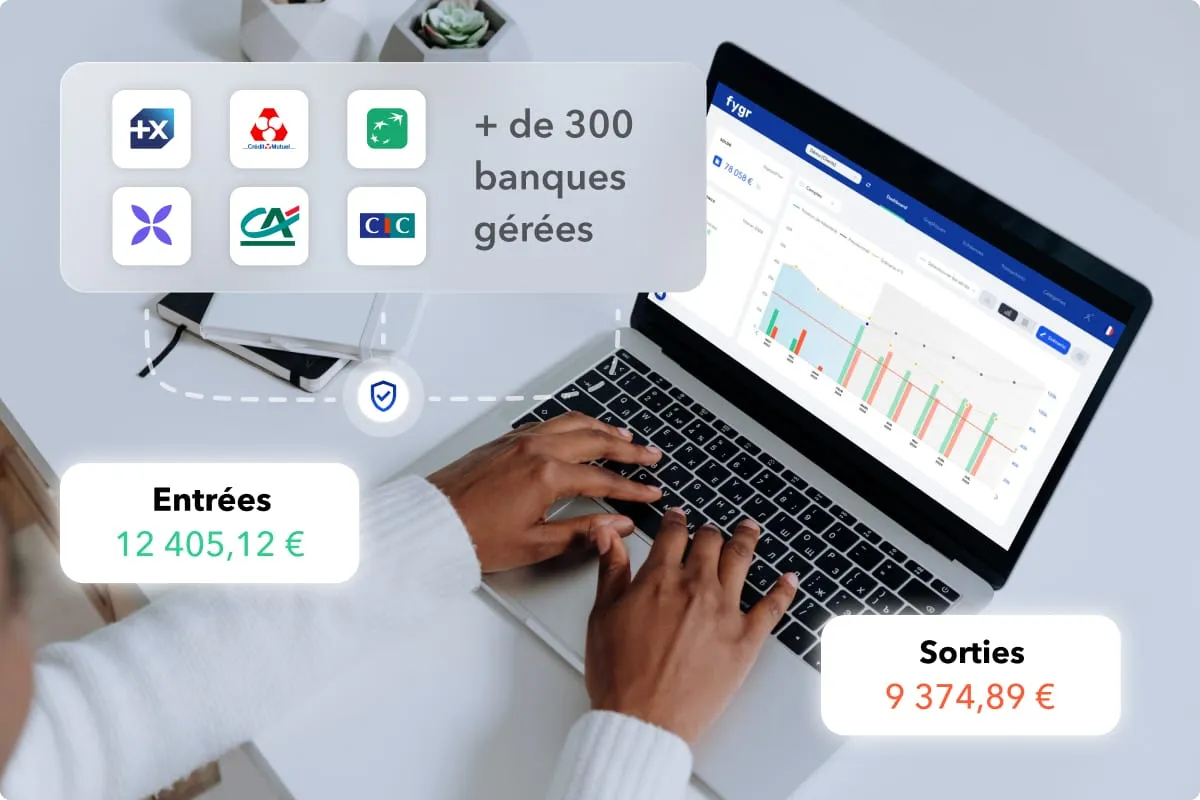
The diversification of sales channels—physical stores, marketplaces, e-commerce sites, wholesale—complicates financial management and makes a more structured approach essential. Centralizing cash flows provides a consolidated, real-time view of the financial situation. Automation, particularly through bank synchronization, reduces human error, ensures optimal transaction traceability, and frees up time for teams to focus on strategic analysis rather than manual data entry.

Optimize inventory and supply management

Optimizing inventory management is essential to ensuring healthy and efficient cash flow. A predictive and dynamic approach to procurement is based on the analysis of past sales, market trends, and financial forecasts. Using this data, it becomes possible to determine the optimal inventory level, thereby avoiding unnecessary financial commitments while ensuring product availability. Rather than a constraint, inventory management then becomes a real lever for financial performance.

"With Fygr, we can easily get an overview of our expenses and our various sources of income."

Read the testimonial
Collins Njiakin
Co-founder, Wacols Flour
CHOOSE FYGR

Why use Fygr as a merchant?

There is only one solution for implementing all these best practices: Fygr. It is cash management software that is perfectly suited to all types of retailers. Find out below how software like Fygr could help you boost your business's cash management.
GOOD REASON #1

Automatic bank synchronization

Manage the complexity of your financial flows in real time
Precise distribution of flows according to the seasonal cycles of your commercial activity
Identification of performance by product line and point of sale
Connect all your entities and banks in one place
GOOD REASON #2

Predictive financial management

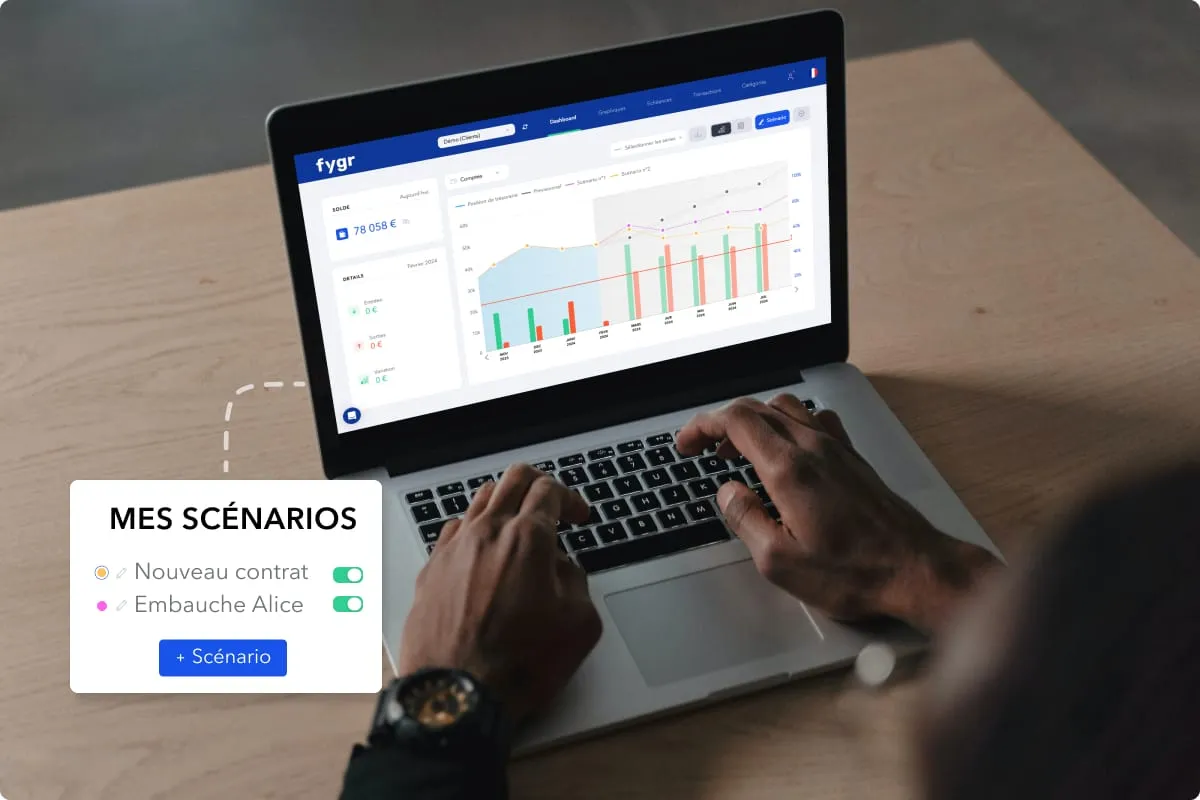
Anticipate your financial needs and simulate the impact of seasonal variations
Cash flow modeling based on your business cycles
Automatic calculation of projected margins by product family
Decision support for stock investments and business development
GOOD REASON #3

Comparative analysis forecast/actual

Adjust your strategy in real time thanks to multi-criteria analysis
Dynamic comparison between forecast and actual
Automatic detection of performance drivers and areas for improvement
Dynamic dashboards to support strategic decision-making

They chose Fygr

Here's what some of our customers have to say after choosing Fygr to visualize their financial data:
Finally, a simple and intuitive tool.
That I enjoy using.

Fygr allows me to:
- Track my cash position in real time
- Create my own customized financial forecast
- Compare my data vs. my forecasts
- Estimate VAT automatically
- Run scenarios
Laura CHETAIL
CEO @ KOKO Kombucha
Fygr can help you better control your expenses and manage them over time, as it gives you a comprehensive, long-term view of your cash flow. It doesn't happen on its own, but I must admit that Fygr is very comprehensive and saves a considerable amount of time.
Dany Fernandez
Manager @ Atelier du pic
Very practical and intuitive software. The team is always attentive, helpful, and friendly. I highly recommend it!
Kods Mahdhaoui
CEO @ Paris Monceau Dental Practice
FAQ

Everything you need to know about cash management for retailers

Answers to the questions you ask us most often.
How to choose cash management software for a business?
To choose the right cash management software, start by identifying your specific needs: volume of multi-channel transactions, number of points of sale, necessary integrations. Choose software that offers an intuitive interface and features tailored to fast inventory turnover and seasonal variations. Check compatibility with your sales tools and make sure that customer support understands the specifics of the commercial sector. Fygr may be a relevant solution if you want detailed cash management.
What are the advantages of cash management software over Excel for a retailer?
Cash management software automates business-specific processes, significantly reducing margin tracking errors. Unlike Excel, it provides real-time updates of sales data, automated dashboards by point of sale, and a consolidated view of your multi-channel receipts. Backups are automatic and secure, with accurate synchronization of banking and sales data.
How can you make reliable cash flow forecasts for a business?
To make reliable forecasts, collect accurate historical data covering at least 12 months, taking into account seasonal factors specific to your industry. Analyze your cash flow cycles, taking into account inventory variations, sales periods, and supplier/customer payment terms. Include all recurring commitments and anticipate inventory replenishment needs. Use scenarios adapted to market variations and regularly update your forecasts based on actual results.
How long does it take to set up cash management software for a business?
Setup time varies depending on the complexity of your business organization (from a few hours to a few weeks). The time required depends on the number of points of sale, sales channels, and interfaces to be integrated. Fygr allows for quick setup while taking into account the potential complexity of your business model, whether it is single or multi-store.
How much does cash management software cost for a business?
At Fygr, prices start at €59 per entity and per connected bank account. Pricing is tailored to the specific needs of businesses, with a particular focus on small and medium-sized enterprises.
Who are Fygr's competitors and which one should you choose?
Fygr's main competitor is Agicap. Agicap is a well-known cash flow management software, but it is more expensive and often more complex. Fygr positions itself as a solution that is better suited to medium-sized businesses, offering ease of use and a detailed understanding of industry challenges.
How do I know if my business needs cash management software?
Your business needs cash flow management software if you encounter: difficulties in forecasting your cash flow during critical periods, significant time spent on Excel spreadsheets, a lack of visibility on your margins by product family, or significant growth requiring more accurate financial management.
What are the essential features of cash management software for a business?
Essential features include multi-channel bank synchronization, cash flow forecasting adapted to seasonal variations, margin tracking by product family, point-of-sale dashboards, and detailed financial analysis reports.
Does cash management software handle invoice tracking?
Yes, Fygr handles the tracking of supplier and customer invoices, with integrations with leading invoicing and sales management software. The software allows you to import invoices directly and integrate them into your cash flow forecasts.
How can you measure the ROI of cash management software for a business?
ROI is measured by comparing the cost of the software to the benefits generated: time saved on administrative tasks (5-10 hours per month), inventory optimization, reduction in financial immobilization, improved payment terms, and better negotiations with suppliers thanks to accurate financial visibility.
What is the difference between cash management software and accounting software for a business?
Accounting software focuses on recording past transactions, while cash management software offers a forward-looking and operational view. It enables detailed analysis of cash flows, inventory, and performance by point of sale, whereas traditional accounting provides a retrospective and legal view.