How can you optimize cash flow management for a restaurant?

Cash flow management in a restaurant requires specific skills that are essential to master. Discover the best practices for optimizing your cash flow management in 2026.

Catering: key points to remember about cash flow management

The majority of failures in the restaurant industry are not related to a lack of customers, but to cash flow and financial management issues.
Ultra-tight margins (3-5% net margin on average) where every euro counts
Extreme volatility with fluctuations of 30-50% between high and low season
Complex flows (CB, cash, platforms, meal vouchers) with frequent disbursements
Critical food costs (target 25-32% of turnover) to maintain profitability
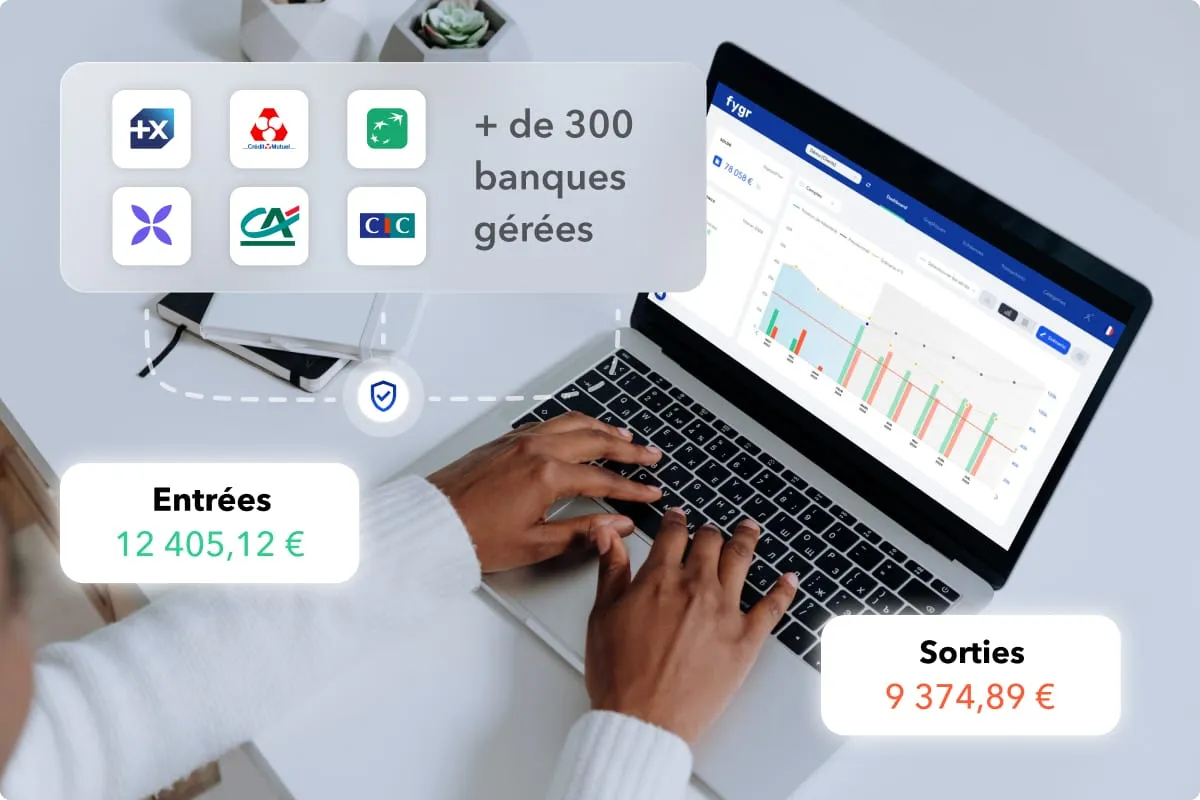
Fygr enables restaurant owners to effortlessly manage their cash flow with automatic bank synchronization, dynamic projections, and smart alerts.

The specific cash flow challenges for restaurants

Why is cash flow management particularly difficult for a company in the restaurant industry? We have identified three major issues.

Why are restaurant revenues so unpredictable?

The restaurant industry is characterized by unprecedented financial volatility.
According to the UMIH (Union des Métiers et des Industries de l’Hôtellerie), restaurant activity is highly seasonal, with significant variations in revenue between high and low seasons, particularly in tourist areas.

Restaurants face constant fluctuations in revenue, dictated by multiple factors such as seasons, local events, consumer trends, and economic uncertainties.

This inherent instability creates constant pressure on cash flow, making each month a challenge for financial survival where the slightest management error can compromise the economic balance of the establishment.

Why are restaurant profit margins so low?

Net margins are extremely tight, ranging from 3% to 8% according to the French Franchise Federation (FFF), with the following typical cost breakdown:
- Food cost: 25-32% of revenue (industry standard)
- Personnel costs: 30-35% of revenue
- Rent and fixed costs: 8-12% of revenue
- Other costs: 15-20% of revenue

The minimum wage in the hotel industry is €11.65/hour with approximately 42% employer contributions, making team management particularly costly.

Why is it so difficult to track a restaurant's cash flow?

The restaurant industry is characterized by unique operational complexity, with multiple sources of revenue and diverse payment methods.

A restaurant must simultaneously manage cash and card payments, tips, on-site sales, takeaway and delivery sales, while juggling frequent supplies and variable labor costs. This multiplicity of financial flows makes effective manual management impossible and naturally exposes the establishment to risks of losses and errors.

According to the Groupement National des Indépendants (GNI), 68% of business failures in the restaurant industry are due to cash flow problems, not a lack of customers or quality. Cash flow forecasting errors cost independent restaurants an average of €15,000 to €25,000 per year.
BEST PRACTICES

Best practices for managing cash flow in a restaurant

Reducing waste and optimizing food inventory management

Inventory management is a crucial issue for restaurants, where the perishability of ingredients has a direct impact on profitability. According to ADEME (the French Environment and Energy Management Agency), food waste accounts for between 15% and 20% of raw material purchases in poorly organized restaurants.

This equates to a loss of €4,000 to €7,000 per year for an average restaurant with a turnover of €300,000. An effective strategy involves methodical, daily monitoring of supplies, anticipating actual needs based on reservations, seasonal events, and consumption trends.

Implementing a dynamic inventory system reduces food waste, allows for more favorable pricing with suppliers, and optimizes orders.

This approach requires precise traceability of each ingredient, from the moment it enters the kitchen to the moment it is consumed, ensuring both the quality of the dishes and cost control.

Analyze the profitability of each service (dining room, bar, terrace)

Each area of a restaurant—the dining room, bar, terrace—is a separate profit center with its own economic dynamics.

A detailed analysis of profitability by service allows you to accurately identify strengths and areas for improvement.
This approach involves meticulously tracking the revenue and costs associated with each space, taking into account the specific characteristics of each area: average prices, types of customers, peak periods of activity.

By understanding these nuances, restaurant owners can adjust their strategy, reorganize spaces, adapt menus, and optimize resource allocation to maximize overall profitability.

Anticipate seasonal cash flow variations

The restaurant industry experiences significant fluctuations in activity depending on the season, holidays, and local events. Effective cash flow management relies on the ability to anticipate these variations.
This means building accurate financial forecasts that incorporate these cycles, building up reserves during good times to get through the leaner periods.

Accountants specializing in the restaurant industry often recommend having a cash reserve equivalent to several months of fixed costs. For a restaurant with monthly expenses of around €15,000, this represents a safety margin of tens of thousands of euros.

This
approach also involves developing diversification strategies, such as offering additional services during slower seasons, negotiating flexible terms with suppliers, or implementing loyalty programs that secure revenue.
CHOOSE FYGR

Why use Fygr for a restaurant?

The solution for taking all of these best practices into account: Fygr. Fygr is cash management software that is perfectly suited to meet all of the cash management needs that a restaurant may encounter. Fygr supports hundreds of restaurants in France, from independent bistros to fast food chains. Read on to find out how Fygr could help you better manage your cash flow.
GOOD REASON #1

Automatic Bank Synchronization

Centralize your catering financial flows and optimize the traceability of your revenues
Real-time revenue tracking by service (dining room, bar, takeaway)
Automatic categorization of food and operational expenses
Accurate identification of profitability by type of service (meals, events, delivery)
GOOD REASON #2

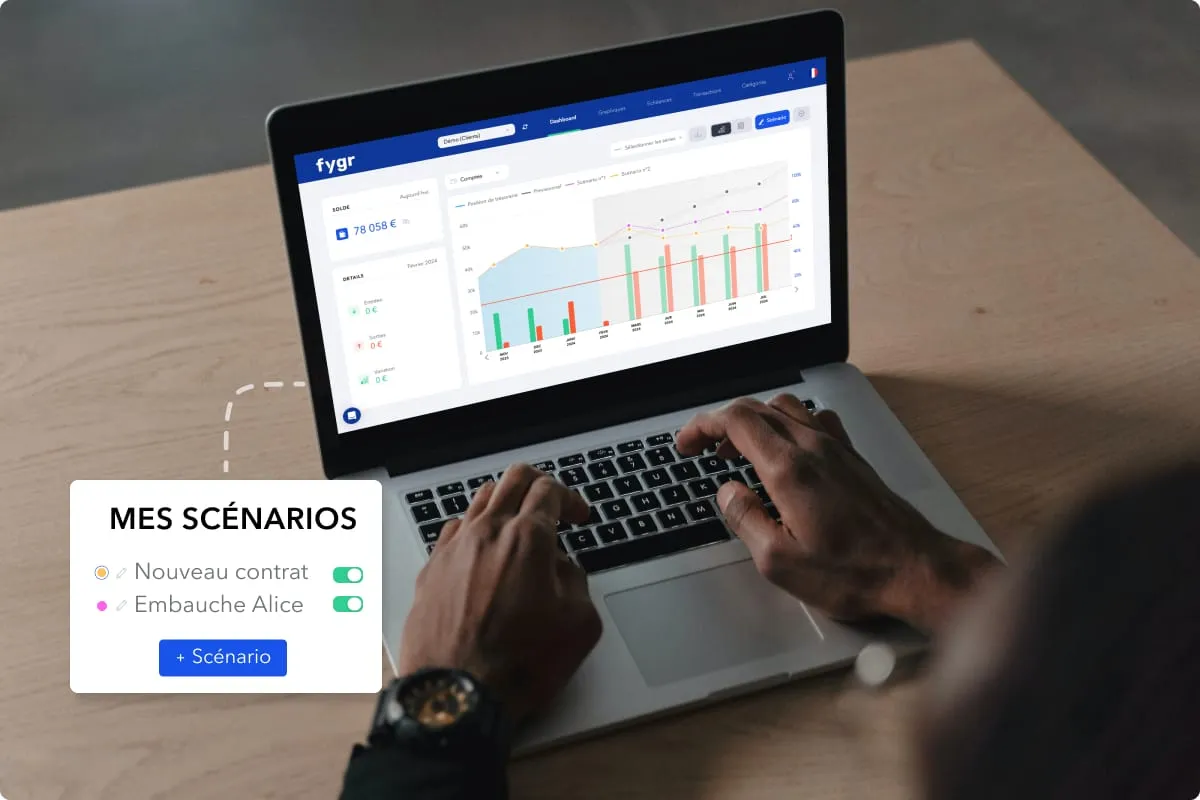
Dynamic Financial Projection

Modeling seasonal flows (tourist periods, events, holidays)
Simulation of the impact of advertising campaigns on your cash flow in the short and medium term
Simulation of the impacts of variations in food and personnel costs
Cash flow projections for slow periods and investments
GOOD REASON #3

Proactive Financial Management

Accurately measure the actual performance of your establishment
Comparative analysis of costs and revenues by profit center
Identification of operational optimization levers
Automatic benchmarking against industry standards

They chose Fygr

Here's what some of our customers have to say after choosing Fygr to visualize their financial data:
No entrepreneur likes to keep track of their cash flow.
And yet, it's the number one cause of start-up failure.
I tried everything on my own, without success.
Until I discovered Fygr.
Finally, a simple and intuitive tool.
That I enjoy using.
Laura CHETAIL 🥂
CEO @ KOKO Kombucha
Many thanks to Julie at FYGR for her patience during our discussions about how to use the tool! We are receiving excellent support, thank you!
Sochanda Pich
CEO @ MyArtistPlace
This is THE essential solution for cash flow management and forecasting! Julie and Dya are always available and incredibly responsive! Well done to the whole team!
Stephen Calleja
Executive @ Callvin
FAQ

Everything you need to know about cash flow management for restaurant businesses

Answers to the questions you ask us most often.
How to choose cash management software for a restaurant?
To choose the right cash management software, start by identifying your specific restaurant needs: ticket volume, number of services, types of sales (dine-in, takeout, delivery). Choose software that offers an intuitive interface and features tailored to the constraints of the food industry, such as food cost management. Check compatibility with your POS systems and make sure that customer support understands the challenges of the restaurant industry.
What are the advantages of cash flow management software over Excel for a restaurant?
Cash management software automates processes specific to the restaurant industry, significantly reducing errors in food cost calculations and inventory management. Unlike Excel, it allows real-time tracking of sales by service, accurate analysis of dish profitability, and a consolidated view of different sales channels. Backups are automatic, secure, and incorporate the specific accounting requirements of the restaurant industry.
How can you make reliable cash flow forecasts for a restaurant?
To make reliable forecasts, collect historical data for at least 12 months, taking into account the highly seasonal nature of the restaurant industry. Analyze your revenue cycles, incorporating variations related to events, tourist seasons, and holiday periods. Take into account specific costs such as food supplies, flexible staffing costs, and variations in customer traffic. Use differentiated scenarios that reflect the volatility of the sector and update your forecasts regularly.
How long does it take to set up cash management software for a restaurant?
Setup time varies depending on the complexity of your establishment, ranging from a few hours for a small restaurant to several weeks for multiple establishments or those with complex systems. The time required depends on the number of points of sale, the types of services offered, and the necessary integrations with your existing systems (cash register, accounting, inventory). Good software should quickly adapt to the specific characteristics of your establishment.
How much does cash management software cost for a restaurant?
Prices generally range from €50 to €300 per month, depending on the size of your establishment and the features you need. Good software should save you at least 35-40 hours per month, which is its cost in terms of productivity.
Who are the competitors in the restaurant cash flow management software market?
The French market for cash management software for restaurants has several players:
- Fygr: intuitive interface, quick onboarding (a few hours), specialized restaurant support
- Agicap: advanced features, suitable for multi-site chains
- Excel: free but time-consuming (up to 12 hours/month of manual tracking)According to customer reviews on Google, Fygr has an average rating of 4.9/5 for its ease of use, which is particularly appreciated by restaurant owners who have no accounting training. Fygr is generally preferred for its more intuitive interface than Agicap and its more affordable price.
How do I know if my restaurant needs cash flow management software?
Your restaurant needs this type of software if you have difficulty forecasting your financial situation, if you spend a lot of time on administrative tasks, if you struggle to control your food costs, or if you manage multiple establishments or services. This is particularly relevant if your annual turnover exceeds €250,000.