Optimizing cash flow management for a construction company

Construction companies face very specific cash flow challenges that must be addressed effectively. In this article, we will look at how cash flow management software such as Fygr can help meet these challenges.

Construction: key points to remember about cash management

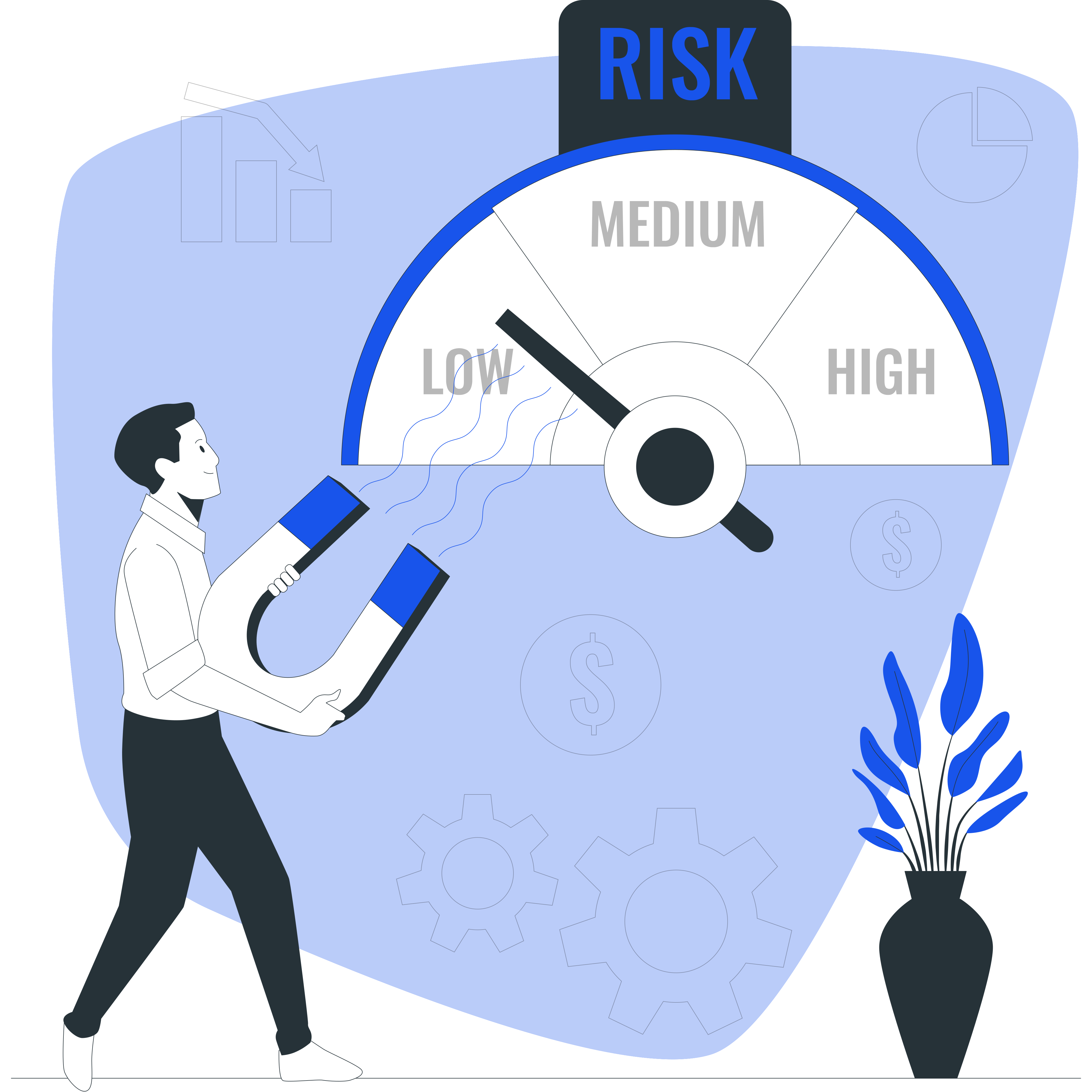
Cash management is a vital issue for construction companies, which face long projects, complex cash flows, and structurally low margins. The tensions stem from a permanent imbalance between advance payments, payment delays, and high operational risks:
Long and complex project cycles with initial investments before cash receipts
High economic volatility (economic cycles, public policy, market)
Very low margins (2-5%), making each project financially sensitive
Constant operational risk (late payments, overruns, defaults)
Fygr enables construction companies to secure their cash flow on a project-by-project basis, providing a clear, forward-looking, and operational view of financial flows.


The specific cash flow challenges for the construction industry

Why is cash management particularly difficult for companies in the construction industry? We have identified three major issues.

Extremely long and financially complex project cycles

Construction projects often span several months or even years, with massive initial investments and particularly complex financial flows.

Companies must advance considerable costs for equipment, materials, and labor well before receiving the first payments.

This reality creates constant pressure on cash flow, as companies must simultaneously finance several projects with potentially significant payment delays.

Ongoing economic volatility

The construction industry is structurally dependent on economic conditions, public investment policies, and construction cycles.

This instability results in sharp fluctuations in order books, with periods of intense activity alternating with periods of severe project scarcity.

These fluctuations make financial forecasting and resource management extremely complex, forcing companies to maintain a significant cash buffer to absorb these economic shocks.

Reduced margins and high financial risk

Construction companies operate in a highly competitive environment where margins are traditionally very tight, generally between 2% and 5%.

Each project therefore represents a fragile financial balance, where the slightest slip-up can quickly turn a potentially profitable project into a source of losses.

There are many risks: budget overruns, late payments, contractual penalties, and unforeseen investments, creating constant pressure on the company's financial management.
BEST PRACTICES

How to effectively manage cash flow for a company in the construction industry

Segment and monitor each project financially

The complexity of the construction industry lies in the multiplicity of projects with distinct characteristics. A refined approach consists of treating each project as an autonomous financial entity, with its own cash flows, costs, and margins. This segmentation makes it possible to understand the profitability of each project precisely, by isolating specific expenses, material investments, and different types of billing. By adopting this method, construction companies can quickly identify loss-making projects, adjust their strategies, and optimize their resources. Such granularity in financial monitoring becomes a decisive lever for improving overall performance and making informed decisions when bidding for future contracts.

Anticipating construction project financing cycles

The construction industry is characterized by particularly complex and long-term financing cycles. Best practice involves establishing an accurate and dynamic projection of the financial requirements for each project, taking into account all parameters: payment terms, advance payments, work progress, equipment investments, and subcontracting costs. This foresight makes it possible to detect potential cash flow tensions very early on and to put in place appropriate financing strategies. The objective is to maintain constant visibility of financial flows, integrating potential uncertainties and building forward-looking scenarios that secure the company's economic trajectory.

Develop a proactive approach to financial risk management

In the construction industry, financial risk management is a major strategic issue. Best practice involves setting up a system for continuously monitoring and controlling various risks, such as late payments, budget overruns, fluctuations in material costs, and subcontractor defaults. This approach requires the creation of dynamic dashboards that enable real-time monitoring of key financial indicators for each project. It also involves developing structured customer reminder procedures, negotiating secure payment terms, and setting aside provisions for risks. This constant vigilance not only limits potential losses but also maintains the ability to react quickly to financial uncertainties.
CHOOSE FYGR

Why use Fygr in construction?

The solution to significantly improve cash flow management in your construction company: choose cash flow management software such as Fygr. Fygr already supports many companies in the construction industry and is therefore accustomed to responding to the specific challenges of this market.
GOOD REASON #1

Bank synchronization of construction sites

Master the financial complexity of your projects with intelligent synchronization
Real-time tracking of payments by project and by customer
Automatic categorization of expenses according to items (labor, materials, subcontracting)
Complete traceability of financial transactions for each construction project
GOOD REASON #2

Dynamic financial strategy

Turn your forecasts into a lever for operational development
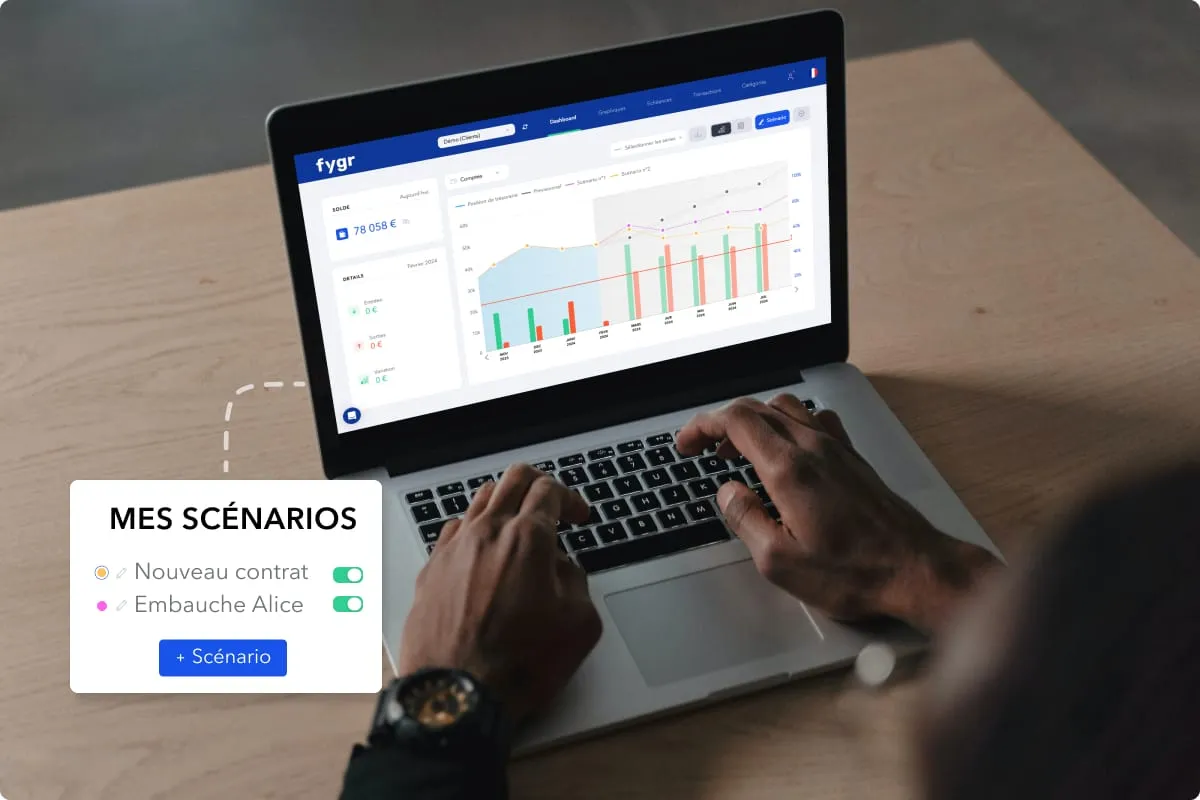
Projection of financing requirements per project with several scenarios
Accurate modeling of complex billing cycles
Anticipating periods of financial stress specific to the construction industry
GOOD REASON #3

Benchmarking

Track the actual profitability of your projects in real time
Automatic comparison between forecast and actual results by project
Rapid detection of budget overruns and margins
Custom dashboards for each type of project

They chose Fygr

Here's what some of our customers have to say after choosing Fygr to visualize their financial data:
Great tool and great team always available to answer any questions. If you're looking for a tool to help you forecast your cash flow, go for it!😇
Ozlem YILMAZ
Administrative Manager @ Ezel Construction
Alexia, the sales representative at FYGR, is really attentive and helpful. For once, I have a software provider who isn't just there to sell, but who cares about the user experience. I highly recommend them!
Sebastian Theophilus
Executive @ Green Energy
I was simply in the dark, navigating by sight without ever being able to anticipate cash flow. Today, Fygr has opened my eyes and given me a real-time decision-making tool. The real power of Fygr lies in its ability to simulate forecasts using different scenarios. What a tool! So simple and easy to use. A whole new experience. I can steer the ship with greater peace of mind thanks to this cash flow management tool. Thank you, Fygr.
Gualbert Ongolo
Founder & CEO @ SafEchaf
FAQ

Everything you need to know about cash management for construction companies

Answers to the questions you ask us most often.
How to choose cash management software for a construction company?
To choose the right software, identify your specific needs: multi-site tracking, work situation management, equipment investment projections. Choose a solution that can handle the complexity of construction cash flows, with features such as retention tracking and margin VAT management. Make sure the software can integrate the specificities of your construction projects and provides accurate visibility into the profitability of each site.
What are the advantages of cash management software over Excel for a construction company?
Cash management software offers complete automation of processes specific to the construction industry, significantly reducing errors in site tracking. Unlike Excel, it allows real-time updating of project data, automated dashboards on site profitability, and simplified collaboration between technical and financial teams. Backups are automatic, secure, and incorporate the specific accounting requirements of the construction industry.
How can you make reliable cash flow forecasts in the construction industry?
For reliable forecasts, collect accurate historical data on your construction sites covering at least 12-18 months. Analyze your billing cycles, taking into account the specific nature of construction projects, client payment terms, and equipment investment cycles. Include all recurring costs (personnel expenses, equipment rental, subcontracting) and predictable income from new contracts. Use scenarios tailored to the specific nature of construction projects and adjust your forecasts regularly.
How long does it take to implement cash management software for a construction company?
Setup time varies depending on the complexity of your organization (from a few days to a few weeks). The timeframe depends on the number of simultaneous projects, the diversity of your activities (construction, public works, renovation), and the interfaces to be configured. Good software should be able to quickly adapt to the specificities of your projects, particularly the management of complex work situations and financial flows.
How much does cash management software tailored to the construction industry cost?
Prices generally range from €100 to €1,000 per month, depending on the size of your company and the complexity of your needs. The software should be viewed as a strategic investment, capable of generating significant gains by optimizing the financial management of your projects and reducing financial risks.
Who are the competitors in the construction cash management software market?
There are several players on the market, such as Agicap, Fygr, and more generalist solutions. The choice depends on the size of your company, the complexity of your projects, and your budget. The most suitable solutions are those that specifically understand the financial challenges unique to the construction industry.
How can I tell if my construction company needs cash management software?
Your company needs this kind of tool if you have difficulty forecasting cash flow on your projects, if you waste a lot of time on Excel spreadsheets, if you lack visibility on the profitability of your projects, or if you manage several projects simultaneously with complex financial flows. This is particularly relevant if your turnover exceeds €1 million per year.